
Partial Dentures
Partial dentures are removable dental appliances designed to replace one or more missing teeth. Unlike full dentures, which replace all the teeth in the upper or lower jaw, partial dentures are customized to fill the gaps in a patient’s smile while preserving the remaining natural teeth.
They can restore your smile, improve your ability to chew and speak, and help prevent neighbouring teeth from drifting into the spaces left by missing teeth. Each partial denture is individually designed to suit your mouth, remaining teeth and personal needs.
Types of Partial Dentures
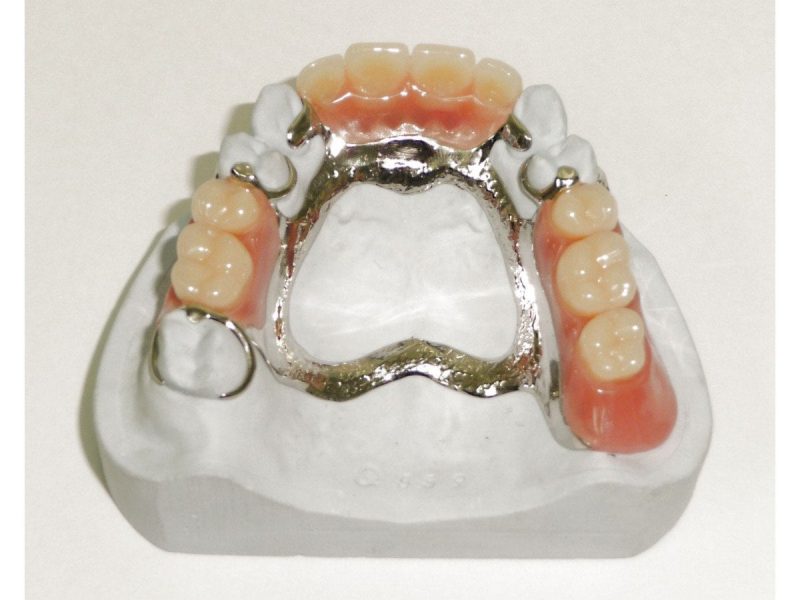
Metal Partial Dentures
Metal partial dentures have a strong, lightweight metal framework with acrylic sections supporting the replacement teeth.
Because the metal framework can be made relatively thin, these dentures are often less bulky and more comfortable than full acrylic partial dentures. They generally provide excellent strength, stability and longevity.
Metal clasps or other components may be used to secure the denture to the remaining natural teeth. In some cases, parts of the framework or clasps may be visible, depending on the position of the missing teeth.
Metal partial dentures are often recommended as a long-term solution when the remaining teeth are healthy and able to support the denture.
Acrylic Partial Dentures
Acrylic partial dentures have a gum-coloured acrylic base that supports the replacement teeth. They are generally a more affordable option and can usually be altered more easily if additional teeth are lost in the future.
Acrylic partial dentures may be used as a temporary solution while the mouth heals following extractions, or as a longer-term option when a metal framework is not suitable.
As acrylic needs to be thicker to provide adequate strength, these dentures can feel slightly bulkier than metal partial dentures. They may also be more prone to breakage and may require repair or adjustment over time.
Flexible Partial Dentures
Flexible partial Dentures are made from a durable, flexible material that gently adapts to the shape of the mouth. They usually have gum-coloured clasps that blend with the surrounding tissues, making them an aesthetically appealing option for some patients.
They can feel comfortable and lightweight; however, they are not suitable for every clinical situation. Flexible partial dentures can also be more difficult to adjust, repair or add teeth to than traditional acrylic dentures.
A thorough assessment is necessary to determine whether a flexible denture is appropriate for your mouth.
Choosing the Right Partial Denture
There is no single type of partial denture that is right for everyone. The most suitable option will depend on:
- The number and position of the missing teeth
- The health and strength of the remaining natural teeth
- Your bite and available space
- Comfort and appearance
- Future treatment needs
- Your lifestyle and budget
At your consultation, your mouth and remaining teeth will be carefully assessed. The advantages and limitations of each suitable option will be discussed with you so that you can make an informed decision.
A Natural Looking Result
The replacement teeth are carefully selected to complement the colour, size and shape of your natural teeth. The aim is to create a comfortable, functional denture that blends naturally with your smile.
Caring for Your Partial denture
Your partial denture and natural teeth should be cleaned thoroughly every day. Remove the denture before cleaning it and use a soft denture brush with a suitable denture cleaner. Your remaining natural teeth and gums must also be brushed carefully to help prevent tooth decay and gum disease.
Unless otherwise advised, partial dentures should be removed at night to allow the gums and supporting tissues to rest.
Regular dental check-ups are important to monitor the health of your natural teeth and ensure your denture continues to fit comfortably. Adjustments, repairs or replacement may be required over time as the mouth and remaining teeth naturally change.
Partial dentures offer a practical, non-invasive and cost-effective way to replace missing teeth. A consultation with your dental prosthetist is the first step in determining which option will best suit your individual needs.